
Cybersecurity & Compliance Support
Securing Systems with Intelligence, Purpose, And Urgency
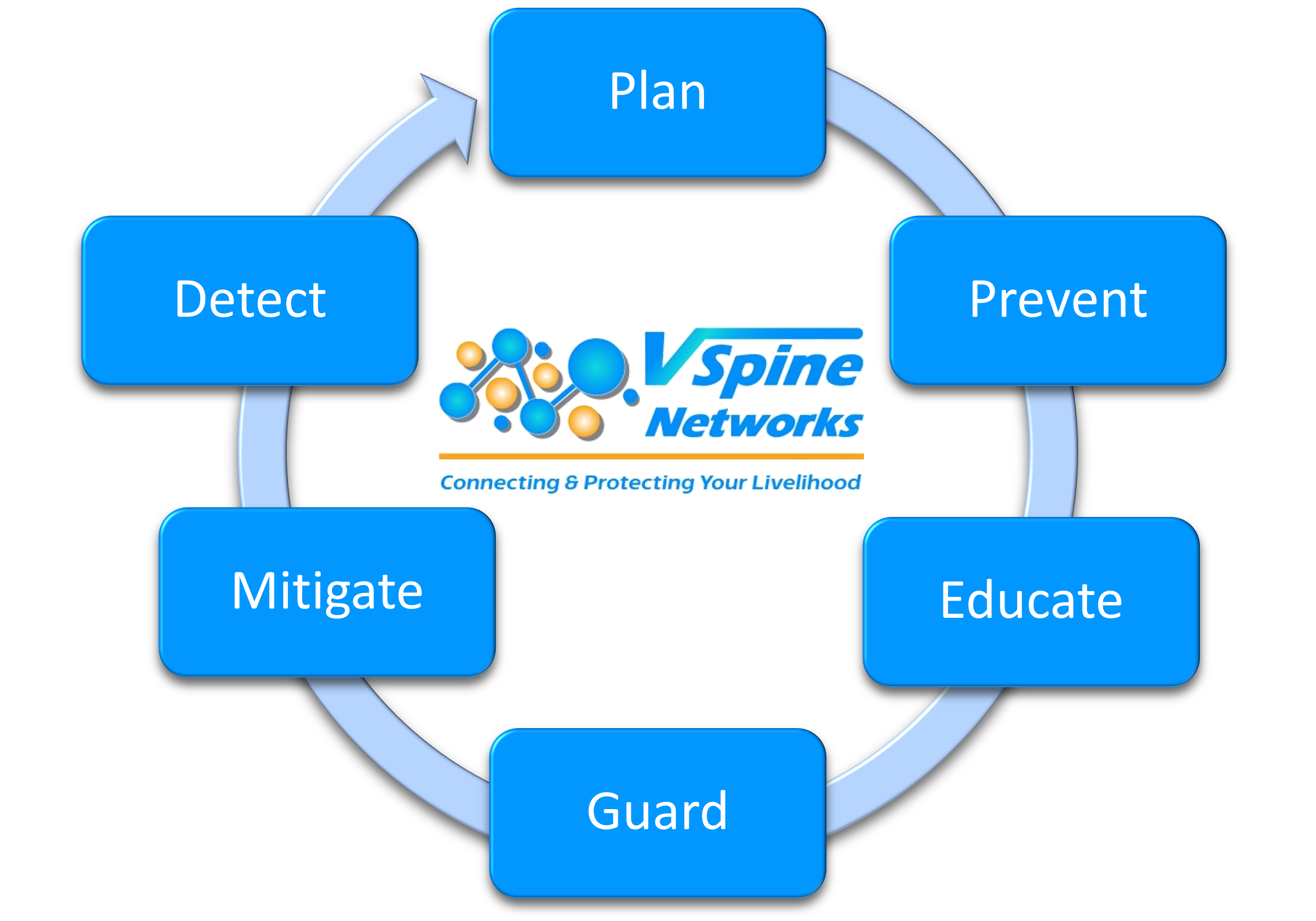
Cyber threats outpace many businesses, exploiting weak systems and untrained staff to cause damage. Without strong protection, recovery is costly, promotes theft/extortion, and provides reputational damage. VSpine Networks provides cybersecurity preventative measures to minimize risks, contain threats, ensure compliance, and protect data with layered defences and swift response.
Reducing Risk And Strengthening Cyber Defenses
Stop ransomware with endpoint protection, email security, and DNS filtering.
Detect breaches early using 24/7 monitoring, alerts, and threat hunting.
Control access with MFA, password policies, and role-based permissions.
Monitor cloud platforms like Microsoft 365 for suspicious user behavior.
Prevent data loss with encryption, backups, and policy enforcement.
Improve readiness with security awareness training and phishing tests.
Align with compliance frameworks through detailed audits and reporting.
It’s not a matter if you will be attacked...but when. Are you Protected?
Forty-four percent of small businesses reported being the victim of a cyber-attack, with an average cost of approximately $4.5M per breach.
Nearly 59 percent of U.S. small and medium-sized businesses do not have a contingency plan that outlines procedures for responding to and reporting data breach losses.
You are not too small to be attacked; just too small to make the news!
How We Protect Your Business From Every Angle
Our cybersecurity approach is layered, proactive, and continuously evolving. We combine advanced tools, real-time intelligence, and proven frameworks to defend your systems against modern threats without disrupting your operations or productivity.
Real-Time Threat Monitoring
We use 24/7 monitoring, automated alerts, and threat detection to identify suspicious behavior and respond quickly to prevent escalation or data loss.
Layered Security Architecture
We combine DNS filtering, application control, email protection, and endpoint defense to block threats at every level before they reach your users.
Incident Response Planning
We create actionable plans for what to do if a breach occurs, including data recovery, legal coordination, and communication strategies, ensuring you're ready to act.
Compliance-Centered Controls
Our services include controls and documentation to support audits and meet critical and complex standards like HIPAA, NIST, PCI, and FTC Safeguards.
Penetration Testing – Risk and Vulnerability Assessment
VSpine Networks will help you create security policies and plans to help you minimize your risk. Give us a call for a free consultation on how to put a ransomware prevention strategy in place to minimize your risk.
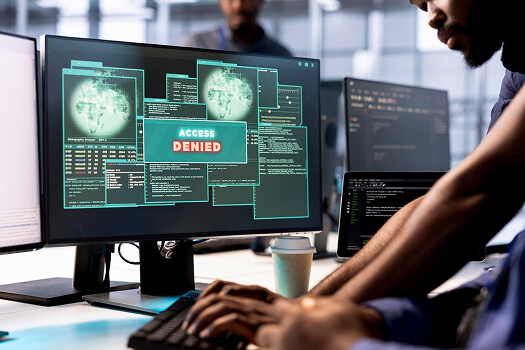
Knowing the risk is half the battle. VSpine Networks offers Level 1 (Black-box testing), Level 2 (Grey-box testing), and Level 3 (White-box testing).
We offer free risk and vulnerability assessments for your network based on limited Level 1 criteria. In addition, we offer full L1 and L3 Penetration tests covering reconnaissance, scanning, ulnerability assessment, exploitation, and reporting. Routine, re-occurring penetration tests are useful snapshots of where your cyber posture is as a baseline against NIST-CSF v2.0 based compliance requirements.
Our Preventative Cyber Security Services Take a Wholistic Approach in Managing Your Security Across People, Places, and Things
An Ounce of Prevention Is Worth Much More Than The Pound of Cure (Incident Response)
Site Security
A firewall is simply not enough. You MUST enhance your cyber posture with a Security Appliance. Besides basic firewall filtering at the application layer, our selected Security Appliances include capabilities such as Intrusion Detection & Prevention, Advanced Malware Detection & Prevention, and Content and DNS Filtering. It is the control plane for your network allowing traffic segmentation in the form of virtual LANs (VLANs) so you can apply the right QoS/Bandwidth and Security policies across all your traffic types. Security appliances are part of the perimeter defense in your overall cyber security architectural posture.


Device Security
OS Patching & Vulnerability Assessments.
Endpoint Detection & Response (EDR).
Browser Security & Management.
BIOS Security
DNS/Content Filtering
End user Security
Password Management.
Multi-Factor Authentication (MFA).
Domain Name System Management/Monitoring.
Reputational Monitoring.
Email Security.
Identity Management.
Dark Web Scans.
Phishing Test.
Security Awareness Training.
Managed Detection & Response (MDR)/SOC Team.
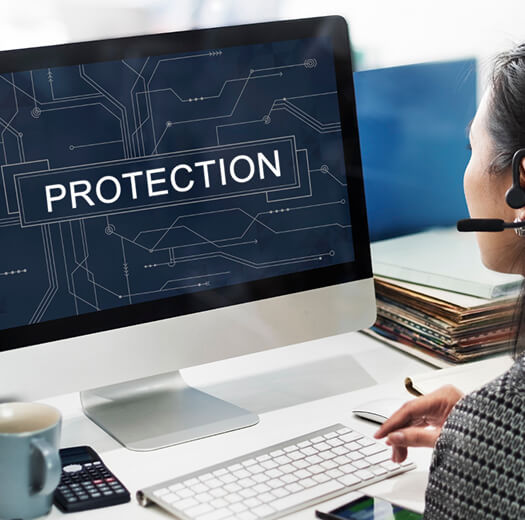
Post Breach Cyber Security Professional Services from Our Certified Team Include:

Digital Forensics Audit
Cyber Security Forensic Audit. Investigate and find evidence to prove or disprove a data breach and the security vulnerabilities that enabled it. The audit consists of preliminary research, On-Site Data Gathering, Analysis, and final Report with primary objective of evidence preservation.
Incident Response & Remediation
In the event of a breach, our Incident Response team will help manage the processes an organization utilizes in identifying, analyzing, and mitigating the security breach or attack in real-time to minimize damage. It includes steps to document the scope of the incident and facilitate a swift recovery while preserving crucial evidence. Once the incident is contained, Incident Remediation steps are taken. Our team will identify and fix the underlying cause of the incident, patching systems, and make necessary adjustments to prevent similar events in the future. The main goal is to improve the organization's security and decrease the chance of future incidents. The goal is to restore business operations as quickly as possible.

"VSpine Networks worked at my parish installing our new network and phone system and it just streamlined everything. Everything was a spider web’s mess beforehand, now it’s all on one network. VSpine Networks is very clear in their bid proposals. We know exactly what we are getting. They didn’t leave us after the installation and did an excellent job in training our staff afterwards. VSpine Networks comes with over 30 years of experience and their knowledge of the industry, equipment, install and maintenance for your organization will go smoothly, especially in excellent customer service/support. Give them a call today and enjoy the same"

FR JOHN PICINIC, PASTOR
Christ Our Light Catholic Church, Cherry Hill, New Jersey
Christ Our Light Catholic Church, Cherry Hill, New Jersey
"The single biggest benefit to St. Michaels is now having a more advanced and reliable system that gives us the versatility to expand and integrate other systems to meet our growing needs for the future The difference from other firms we have used in the past is VSpine Network’s quick and dependable service that is customized to meet the needs of our organization. I would highly recommend VSpine Networks as their service is far above other firms we have used,tome and you will not be disappointed. Call Vin and the team today."

PHIL GIANFORTUNE, PRINCIPAL
St Michael The Archangel Regional School, Clayton, New Jersey
"VSpine Networks created a reliable system. With our old system we would experience service interruptions and very slow speeds. With VSpine Networks, and our new network, we have never lost service and the speeds are exceptional. VSpine Networks excels at support. Whenever there is a question from my team or myself it is answered immediately. After installation, our training was spectacular. We were not left to figure anything on our own. If you are on the fence about hiring VSpine Networks, Just do it! My experience was first class from pricing to equipment and customer care. My only regret was that I didn’t hire VSpine Networks soo"

RICH SUPER, OWNER
ABC Discount Appliance, Pennsauken, New Jersey
Professional services
All our Professional Service engagements include the project details in a Statement of Work (SOW) for:
Design (Network, Voice/VoIP, Video Surveillance, Access Control) Multimedia, Building Automation)
Installation: Implement Products & Solutions.
Integration
As-Built Documentation
Project Management
Training
We take particular care of your environment and ensure daily clean-up. You will be met with professional and courteous team members who always will have your well-being and your needs top of mind.
We ensure proper configuration for manageability and security for a wide range of IP-based technologies. VSpine Networks is constantly evaluating new products to ensure you are up to date with your technology needs.
We ensure that all work is performed in accordance with local and national building codes .
We ensure compliance. The products we recommend meet NDAA and all regulatory requirements.
Our Service Warranty guarantees ninety (90) days after acceptance of our solutions.
We can source and fulfill products from the source of best-of-breed vendors.
FAQs About Our IT Project Management Services
What Should A Cybersecurity Risk Assessment Include?
A complete risk assessment should review endpoints, networks, cloud platforms, user behavior, and existing policies. It must also identify vulnerabilities, evaluate controls, and produce a prioritized action plan.
How Often Should We Review Our Cybersecurity Tools?
At minimum, review your cybersecurity stack once per year. Tools like firewalls, antivirus, and MFA should be tested quarterly, while backup systems and patching schedules should be reviewed monthly.
Can Small Businesses Be Targeted By Ransomware?
Yes. Small businesses are often easier to exploit because they have fewer defenses. Ransomware operators frequently automate attacks and cast a wide net to find vulnerable organizations.
What Happens If We Get Breached?
You must engage legal counsel, isolate affected systems, preserve evidence, notify impacted parties, and start recovery. Having an incident response plan in place before an event is critical.
How Can We Train Employees To Recognize Threats?
Effective training includes regular short lessons, phishing simulations, and easy-to-follow policies. Reinforcement and accountability turn awareness into long-term behavioral change.
Our Partners


































Secure Your Business Against Modern Threats
Give us a call at (856) 336-7795 or complete the form to speak with a cybersecurity partner who understands compliance, response, and real protection.
What Happens Next?
Fill in our quick form
We'll schedule an introductory phone call
We'll take the time to listen and plan the next steps